
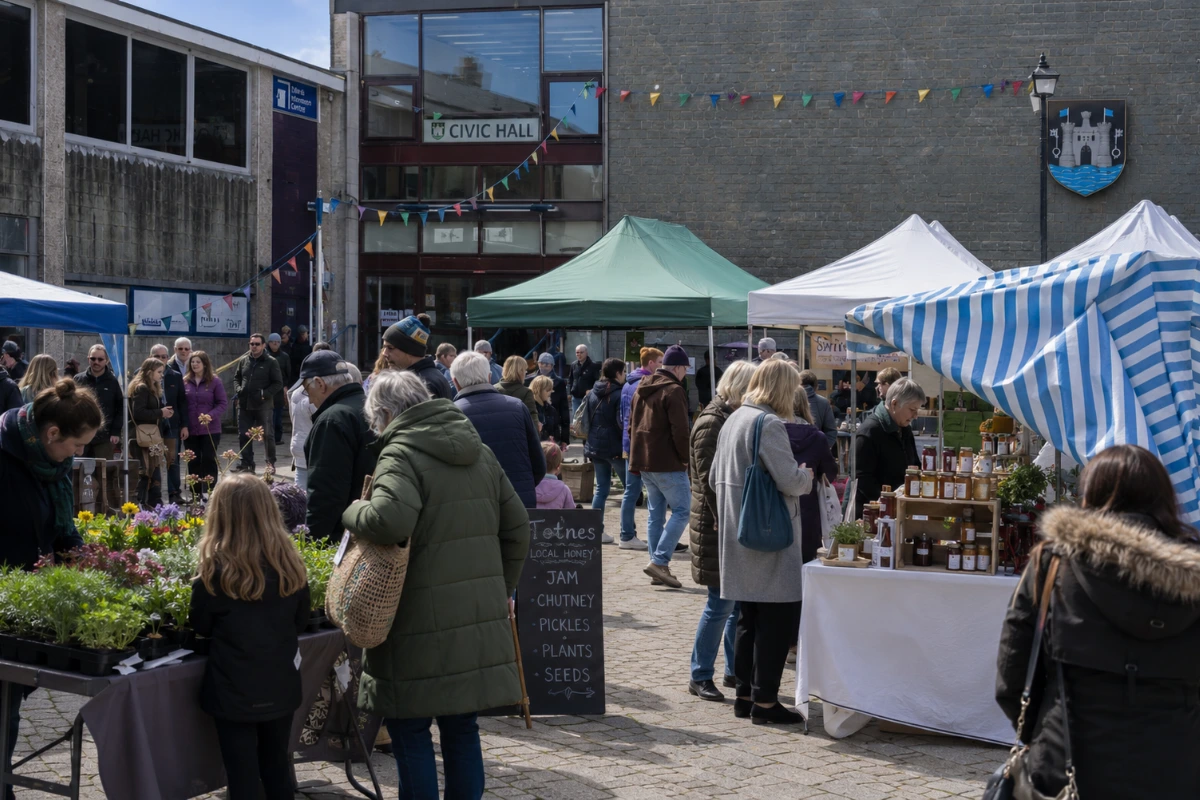
Totnes market, Devon, UK
Policy makers have been grappling with the need to develop policies that address pathways to net zero and have seen food as a lever through which to tackle climate change and biodiversity loss. They have focused on changes in farming practices and what we eat (particularly reducing livestock numbers and lowering consumption of dairy and red meat) as necessary steps to cut emissions (e.g. Climate Change Committee).
While these debates on food and farming futures highlight different attitudes toward diet, they also prompt broader considerations about the future of farming, land use, and the cultural and economic identities embedded in different communities (rural/urban) and consumer behaviour.
Since declaring a Climate Emergencies in 2019, local councils have been developing policies that support lower-carbon food systems, including actions that support dietary change. As part of the Devon Climate Emergency’s Devon Carbon Plan, the county has explored how changes in dietary habits could support its net-zero goals, reporting that agriculture, forestry and other land use accounted for 17% of Devon’s emissions in 2019, and the wider sector represents 21% of total emissions. Linked to this, Devon follows the Climate Change Committee recommendations and is aiming for a 25% reduction in meat consumption by 2040, and 35% by 2050 (CCC 2022).
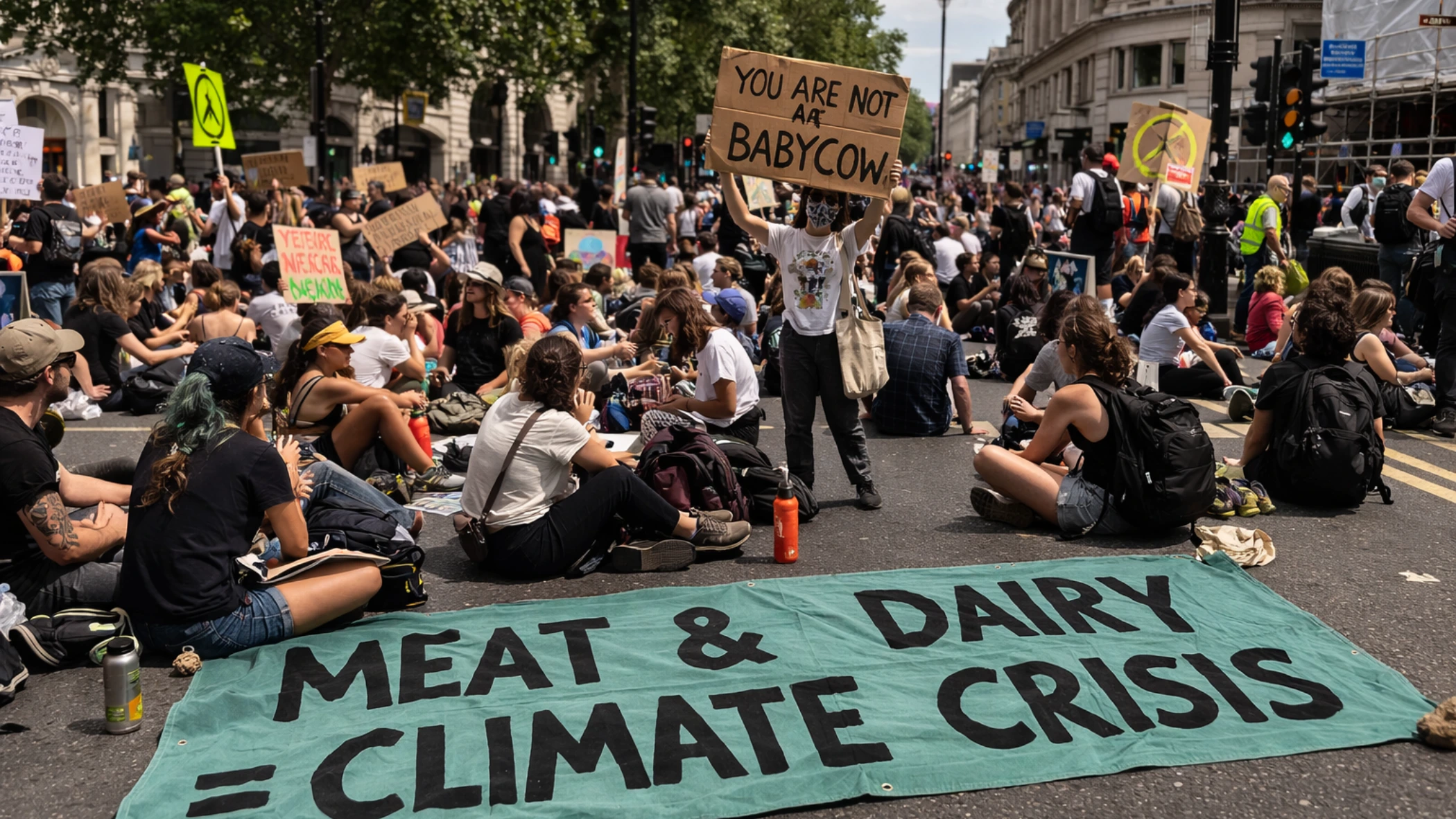
Thousands of farmers descended on central London to protest against changes to inheritance tax.
An example of recent policy action is a formal proposal put to councils to adopt a plant-based eating motion. These motions are often focused on requiring an organisation to promote or adopt more plant-based food options, for example, in catering. Those proposing the motions see them as developing public awareness of food and farming issues and aligning local policies with climate emergency declarations. Motions on plant-based eating have been introduced in some councils (Exeter, Exmouth), rejected by others (North Devon, Torridge), and generated unprecedented and intense opposition, including from farming groups.
The food and farming flashpoint explores the different attitudes toward farming and dietary futures, and how these link to broader considerations about the future of farming, land use, and the cultural and economic identities embedded in different rural/urban communities.
