




Project Details
Delivering sustainability transitions in diverse places across the UK involves changes in how we live and work. The changes associated with sustainability transitions can be perceived in terms of winners and losers, current and emerging new leaders, and often act as a focus of disagreement and conflict over values and judgments about what is fair or just. One example is the recent controversies in Devon relating to the Exeter low traffic neighborhood schemes. These ‘flashpoints’ are relevant not only to the places in which they emerge but also for debate and policy action on delivering sustainable places nationally.
What is a flashpoint?
We understand flashpoints as:
‘Arenas of sustained contestation and disagreement between different actors and/or interests pertaining to issues of sustainability that flare up in specific places and times.’
Thus, flashpoints are or have the potential to become very controversial by sharply dividing opinions and making it hard for people to have a voice.
Research Question:
How can we build new ways of understanding and acting on place-based sustainability contestations that address the local and non-local causes of conflict?
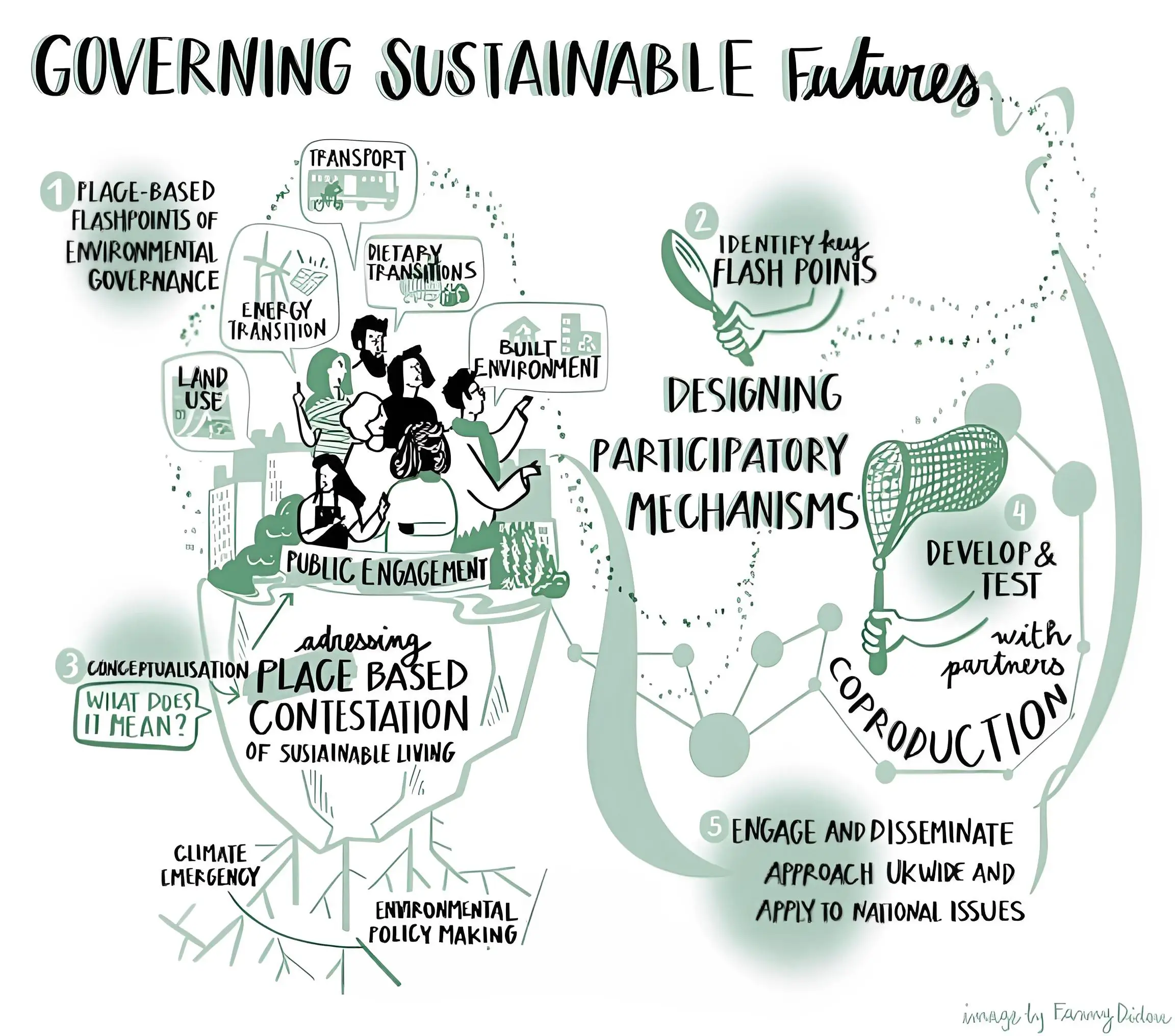
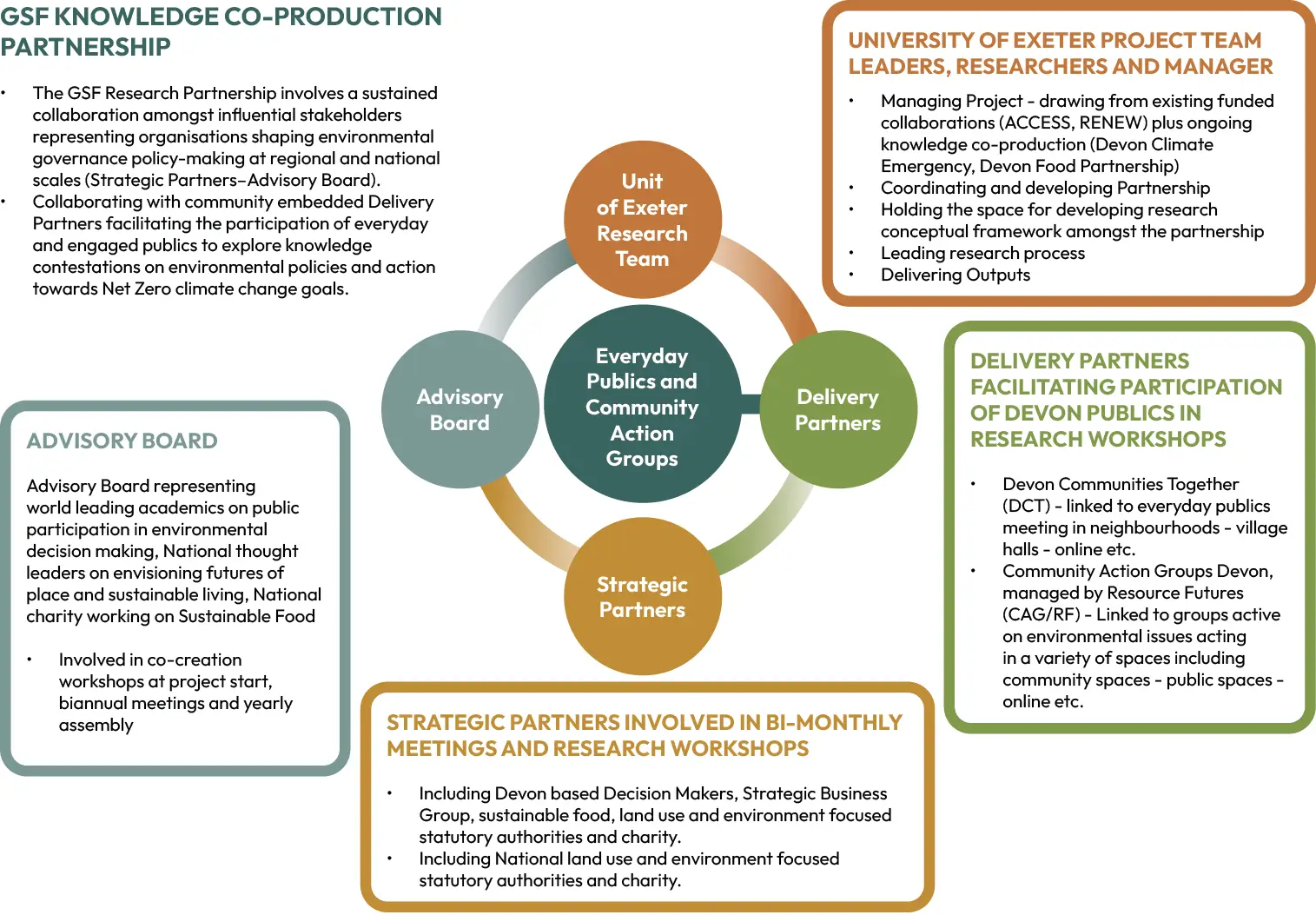
GSF brings together a unique collaboration of social scientists and partners to establish social science and participatory approaches that are alert to questions of power and social difference. These collaborations underpin the project including embedding co-production, Equality Diversity and Inclusion (EDI), and sustainability principles in our research practice.
The project works with eight strategic partners and two community partners to investigate ‘flashpoints’:
Strategic partners:
- Devon County Council
- Devon Food Partnership
- Southwest Business Council
- North Devon Biosphere Foundation
- NatureScot
- Environment Agency
- Natural England
- Local Government Association
Community partners:
- Devon Communities Together
- Resource Futures: Devon Community Action Groups
We are working together to create a framework for how to respond to contestation that relates to the future of sustainable environmental governance. Insights generated will be applied to policy challenges on the ground and used to make recommendations for national policy and practice.
Overall, GSF offers fresh insights into how participatory engagement mechanisms can influence decision making and help address debates within the complex field of policymaking for sustainable environmental transitions. By focusing on place-based flashpoints, GSF will introduce new participatory methods that engage with the multiple layers and scales of conflict, aiming to unlock potentially transformative sustainability outcomes.
Overarching aim:
Examine how we can build new ways of understanding and acting on ‘place-based’ sustainability controversies that address the local and non-local causes of conflict.
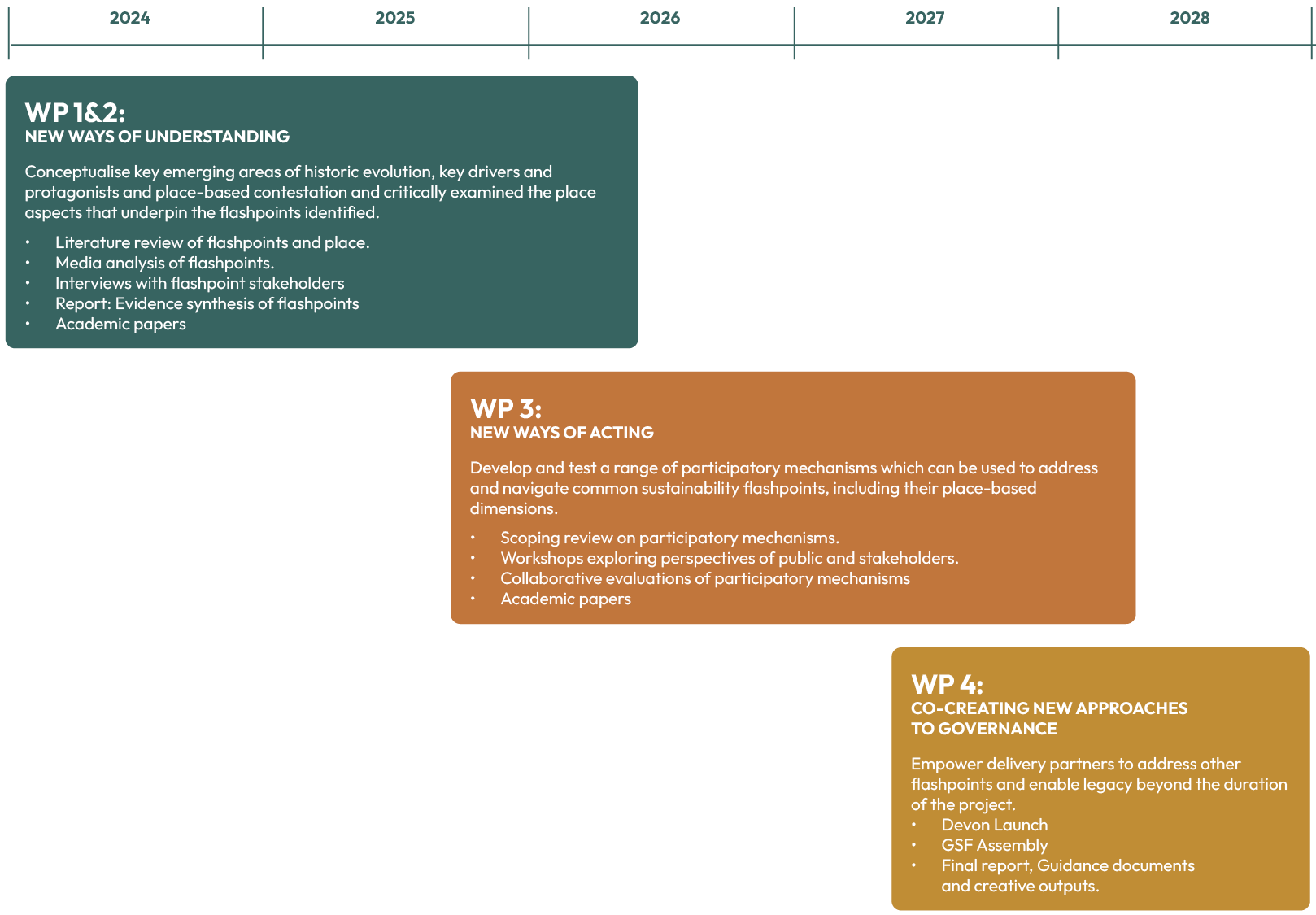
The project is divided into four work packages each with an individual objective:
- Work package 1: To develop an approach that helps to understand the local and non-local causes of conflicts that emerge in a particular place but also have connections to other places and evolve over time.
- Work package 2: To present new ways of thinking about places, and relations between places, that can help unlock new solutions to sustainability policy conflicts.
- Work package 3: To develop innovative collaborative and participatory methods for responding to place-based sustainability conflicts and apply them to policy challenges on the ground.
- Work package 4: To generate new understandings of how participatory processes can support public and stakeholder engagement with the causes of place-based sustainability conflicts and progress action on just transitions in the UK. A core principle of GSF is to make clear connections between insights from regional experience and recommendations for national policy and practice.
